Daily runs, faster sessions and race day.
Start with the run you want to do. Use your pace to describe it, then narrow the choice by distance, surface and fit.
A 6:30/km outing may be easy for you; 5:30/km may be someone else’s race effort. A shoe should answer your running needs, rather than a universal number on a watch.
In this guide: three running roles, three pace examples and five Chinese models to compare.
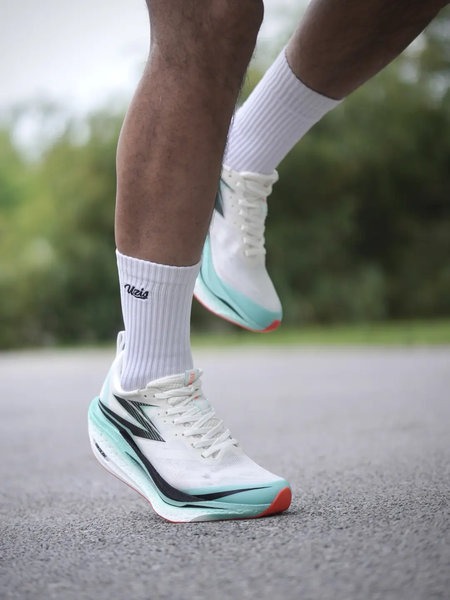
What do you need the next pair to do?
Easy and everyday runs
Begin with a comfortable fit and a shoe you find manageable over your usual outing.
Compare first: BOUNDAI 6 and Fierce 6, using the daily-running brief below.
Faster sessions
Think through the whole session: warm-up, faster efforts, recovery sections and the route home.
Investigate: a different construction only if it adds something useful. Flame 4 ET is one plated road-and-track example.
A planned race
Start with the event and your priorities, then assess your shortlist during training.
Race-focused example: Feidian 7 ELITE. Its positioning tells you what to investigate; fit decides whether it stays on your list.
You can cover more than one role with a single pair. A second pair makes sense when you can name the job it will add.
What does your kilometre pace mean?
Relative effort varies with the person. The CDC explains that the same activity can be moderate for one person and vigorous for another.[1] For shoe selection, a useful brief combines pace with the session:
6:30/km · if it feels easy to you
Write “comfortable daily road running for 40 minutes.” That gives you more to compare than “a shoe for 6:30 pace.” Start with fit and everyday use; a racing label is optional.
5:30/km · identify the effort first
Is this an easy outing, a sustained workout or a race? The answer matters more than the split. Include how long you expect to keep going and whether you need one pair for everything.
4:30/km · if it is your planned race pace
Compare shoes you have assessed in training sessions representative of that effort, within your training plan. Consider the event and fit with race socks, alongside the model’s intended role.
A pace is context, not a carbon-plate threshold. These are illustrative scenarios. They do not prescribe training or establish a minimum speed for a particular shoe.
Five models, five useful comparisons
This shortlist illustrates different published purposes and constructions. It is a selection guide, rather than a tested ranking; it makes no current price or stock promise.
DAILY RUNNING
361° BOUNDAI 6
Why compare it: the brand places BOUNDAI 6 in its daily-running range. The same-model specification identifies a CQT QU!K midsole, a 40mm heel stack and a widened last.[2]
Your fit question: does the forefoot shape suit you without adding unnecessary length? “Widened last” is a description of shape, not a measured 2E or 4E width.
Model reference: 672622201
DAILY RUNNING
361° Fierce 6 Men’s
Why compare it: another daily-use option with a different midsole description: CQT QU!K above a zoned EVA base, including reinforced medial EVA. The official page discusses exercise and commuting.[3]
Your fit question: how does that shape feel when standing, walking and moving? Keep its 5mm insole separate from its 6mm heel-to-toe drop; they describe different measurements.
Men’s model reference: 672612202
PLATED ROAD & TRACK OPTION
361° Flame 4 ET
Why compare it: the official specification identifies a 3D curved glass-fibre plate and describes road, track and commuting use.[4] It provides a concrete example of why “plated” does not always mean “carbon.”
Your training question: are you looking for a different construction for road or track sessions, and does this exact version fit? Check the ET suffix; the photo above shows the Poizon colourway.
Model reference: 672612223
A DIFFERENT MIDSOLE PLATFORM
Li-Ning Red Hare 9 Ultra
Why compare it: Li-Ning specifically names Red Hare 9 ULTRA among the models using Super BOOM Capsule in its corporate statement.[5] This is a verified technology association to investigate alongside the other constructions.
Your version question: is the listing actually the Ultra? Red Hare 9, 9 PRO and 9 Ultra are separate versions. A shared family name is not enough to transfer their specifications or sizing advice.
RACE-FOCUSED
Li-Ning Feidian 7 ELITE
Why compare it: Li-Ning Running’s official account positions this generation and ELITE version for racing and elite runners.[6] It answers a different buying brief from a pair primarily intended for daily use.
Your race question: does the exact version fit and work for you in relevant training? Keep “7” and “ELITE” together when comparing listings; specifications from another generation or suffix may differ.
A simple way to make your shortlist
An on-foot image helps you see a shoe’s proportions and styling. Use the exact model name in the caption; assess toe room and heel security on your own feet.
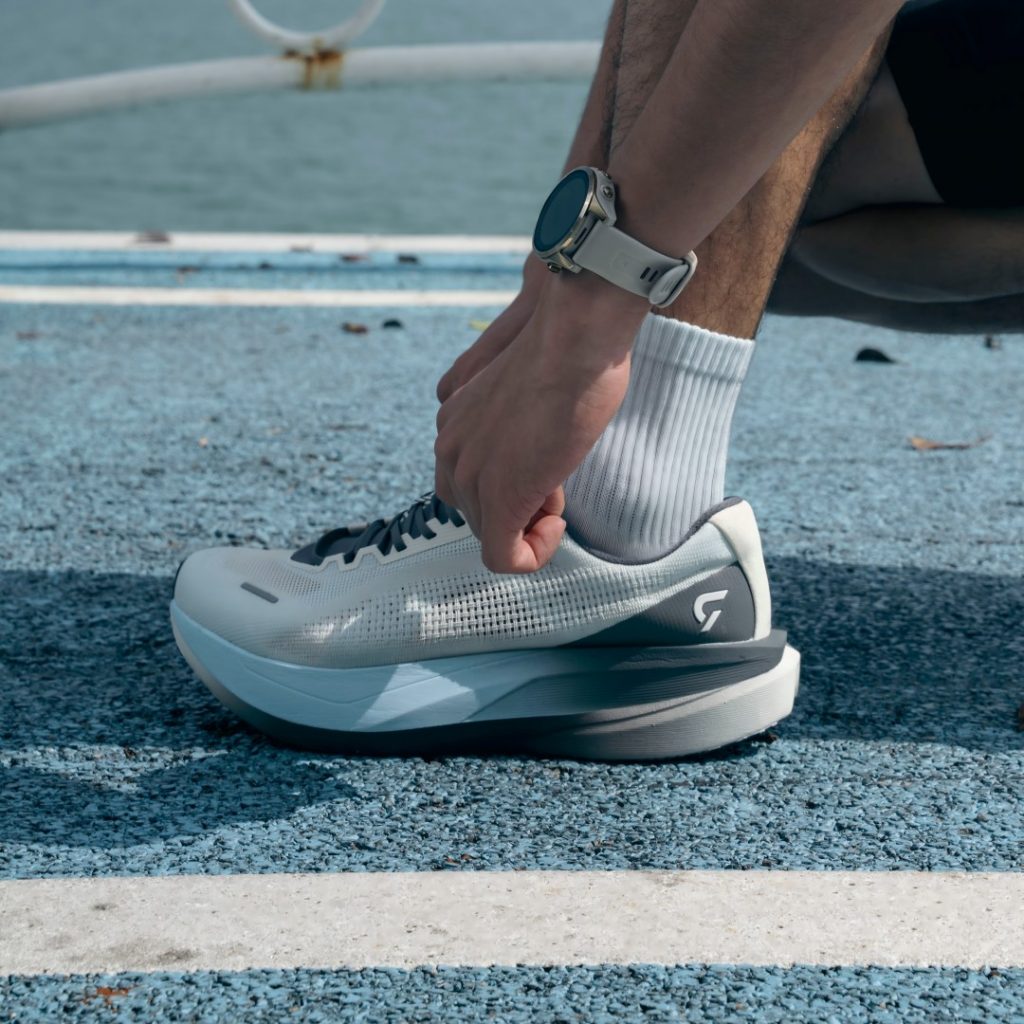
- Write one sentence about your run. Include the session, usual duration, surface and what the pace feels like to you.
- Name the gap in your current pair. For example, forefoot pressure on everyday runs is a different problem from wanting a separate track-session shoe.
- Check the exact model and fit. Use the relevant size chart and the socks you plan to wear. Compare toe room, forefoot pressure and heel security, rather than relying on the size number alone.[7]
- Evaluate before an important outing. Make space within your training plan to assess the shoe. Keep notes on model, size, socks, surface, duration and any pressure or movement you notice.
That short record will tell you more at your next fitting than “true to size” on its own.